K.B. ABUT / DRAWING SET

Kemal Batuhan
Abut

Laboratory Instrumentation · Wireless Sensor Networks · AI & Embedded Systems

I design the instruments and systems I need, then engineer each one until it is affordable enough for anyone to reproduce.

Drawn by Kemal Batuhan Abut
Subject PhD candidacy — instrumentation, sensing, applied AI
Location Türkiye
Date Nov 2026
Sheet 1 of 7

Record

I grew up taking things apart. My father is an electronics engineer; our weekends were his projects, and with my aunt they were experiments. Broken things were never reasons to buy replacements: they were reasons to open the enclosure. The bench I keep at home (CAD, FDM printing, embedded electronics) is where every project on this site begins.

I study at Hacettepe University’s CBRN Threats Management program, after a B.S. in Economics from Bilkent. The combination is deliberate: economics taught me to price the problem (what a distributor markup costs a funded lab, what SIM cards cost an energy company, what downtime costs an intensive-care unit), and engineering is how I solve it. Most of my work is one idea applied repeatedly: capable instruments and systems, engineered until the cost stops being the story.

Education
InstitutionProgram
Hacettepe University Division of Chemistry Jan 2026 – Jun 2027 (expected) M.S. — CBRN Threats Management GPA 4.00 / 4.00
Bilkent University Graduated Aug 2023 B.S. — Economics

Plates

Six projects, each documented the way I actually work: why it started, why it mattered, how it was built, and where it ended. Figures are unedited: the bench, the printer, and the parts are mine.

PLATE I

The Home Laboratory

In service
StatusIN SERVICE
OutputPLATES II–VI
CapabilitiesCAD · FDM PRINTING · EMBEDDED
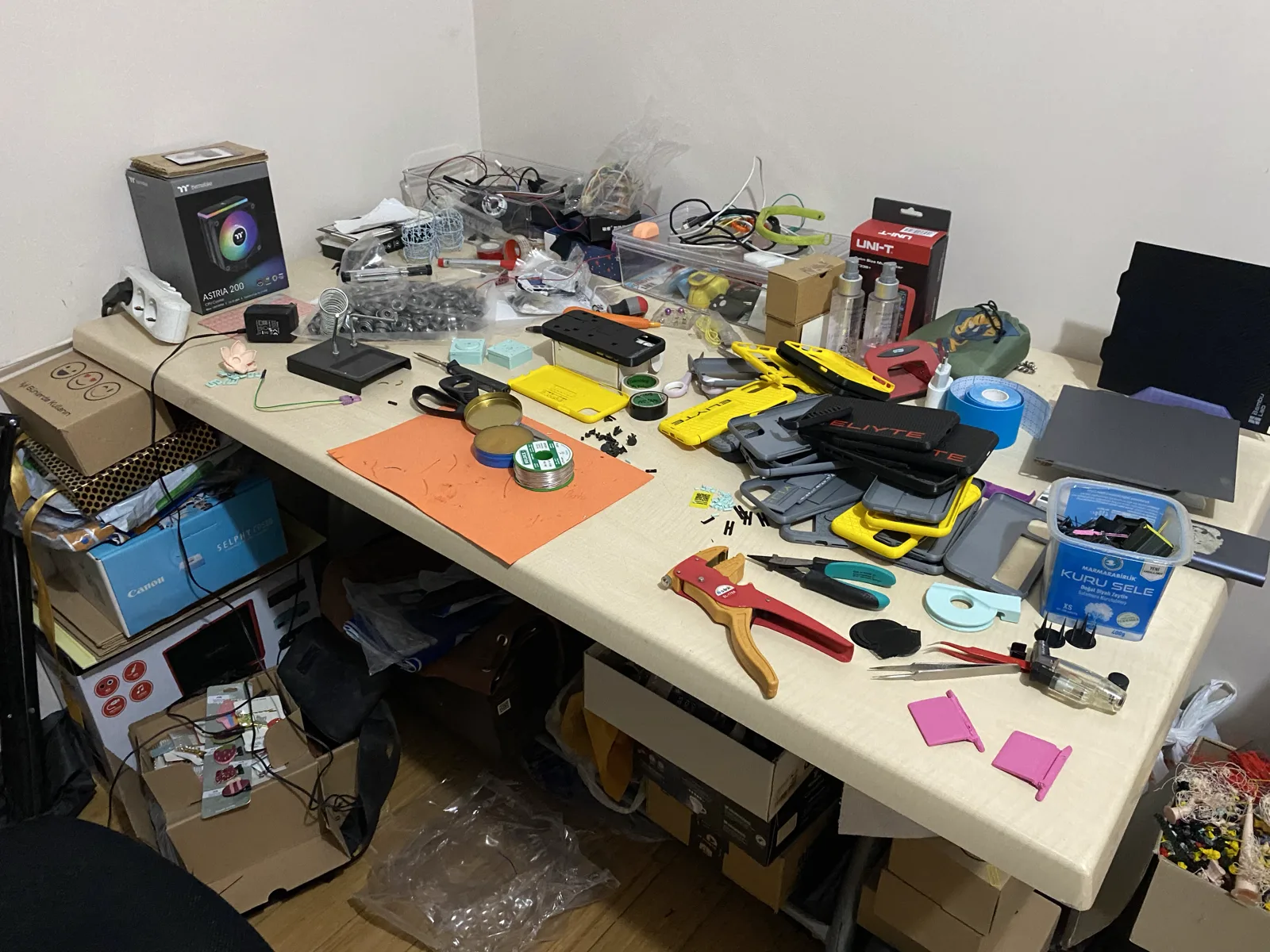
Home laboratory workbench with tools, components and instruments spread across a white bench.
FIG. I-A — THE BENCH. Tools, stock parts and half-finished assemblies; the desk keeps dozens of prototypes per object.
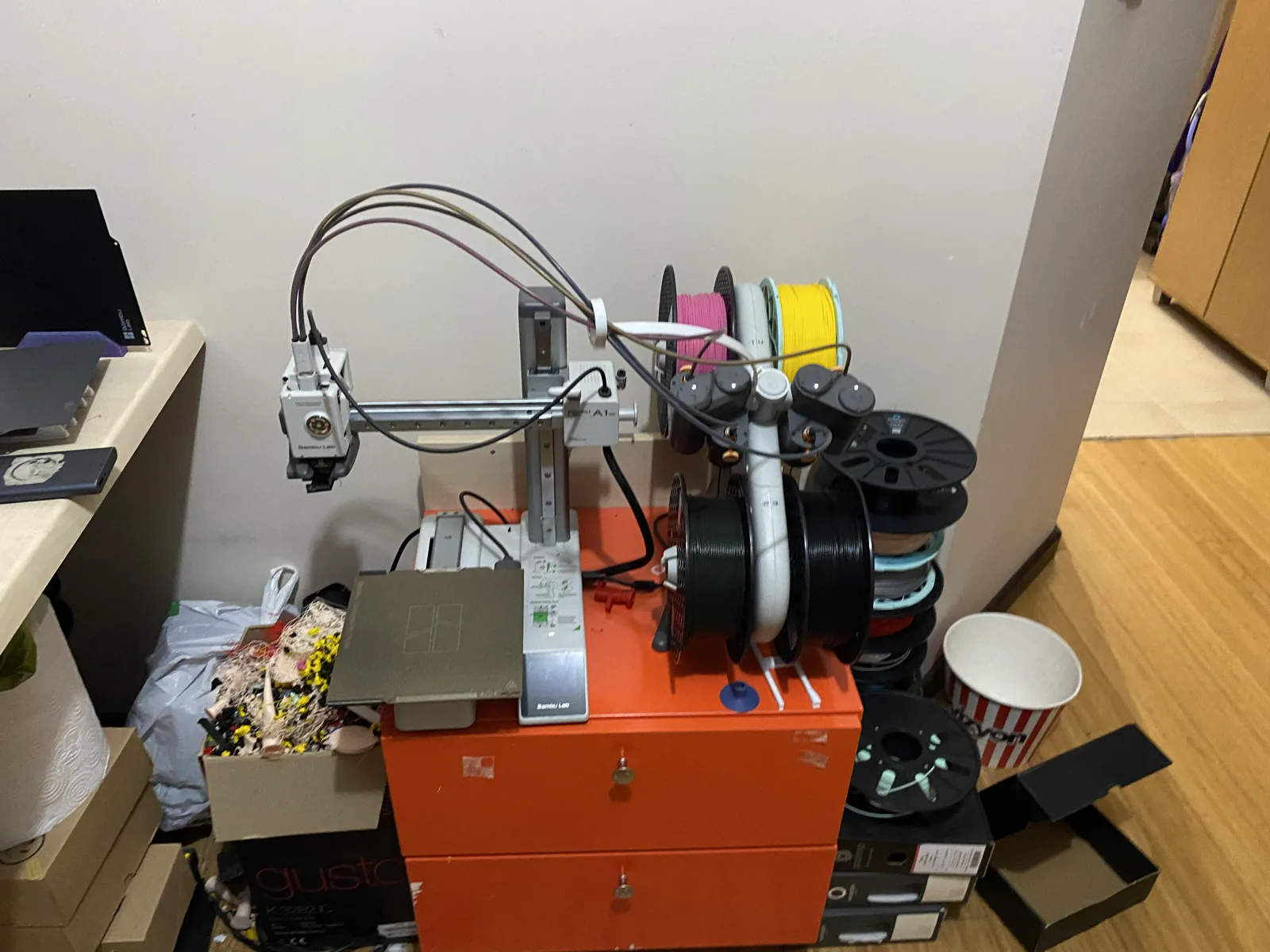
FDM 3D printer with filament spools on an orange tool cabinet.
FIG. I-B — FDM STATION. One printer, every structural part on this site.
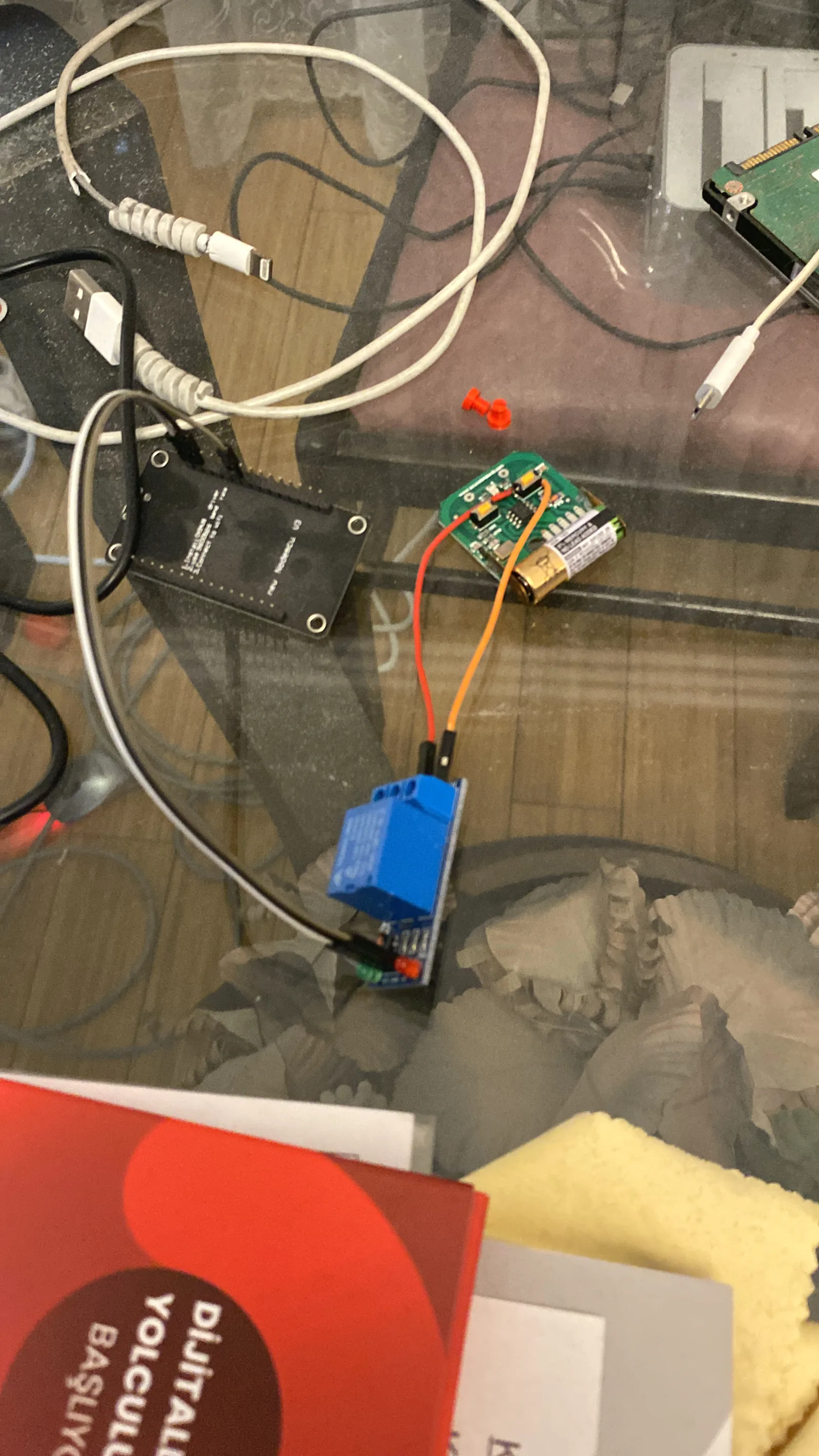
Close-up of the electronics bench with breadboards, cables, a servo motor and circuit boards mid-project.
FIG. I-C — ELECTRONICS BENCH, IN USE.
Motivation

My father is an electronics engineer. Growing up meant building projects with him and running experiments with my aunt, and somewhere along the way the habit of opening things up became the way I think. Projects were never chores: they were how I expressed and developed myself.

Why

I wanted to be someone who makes the tools he needs rather than waits for them. Manufacturing my own calipers, my own enclosures, my own instruments — the self-sufficiency itself was the excitement.

How

I claimed a bench at home and grew it into a small production line: computer-aided design, FDM printing, embedded electronics, and combinations of the three. I iterate hard, pushing a part through versions until it reaches the quality I set out for. I have even modeled my own phone case; the numbered enclosure run in Plate IV came off this same bench.

Result

The lab produces everything that follows on this site: the pump (Plate II), the pipette (Plate III), the mesh nodes (Plate IV). It is the reason low-cost instrumentation is a research direction for me rather than a hobby.

PLATE II

FDM-Printable Peristaltic Pump

In service
StatusCURRENT VERSION, WORKING
Cost< US$100 BOM
ControlESP32 · BLE / WI-FI · DASHBOARD
Development3 YEARS OF VERSIONS
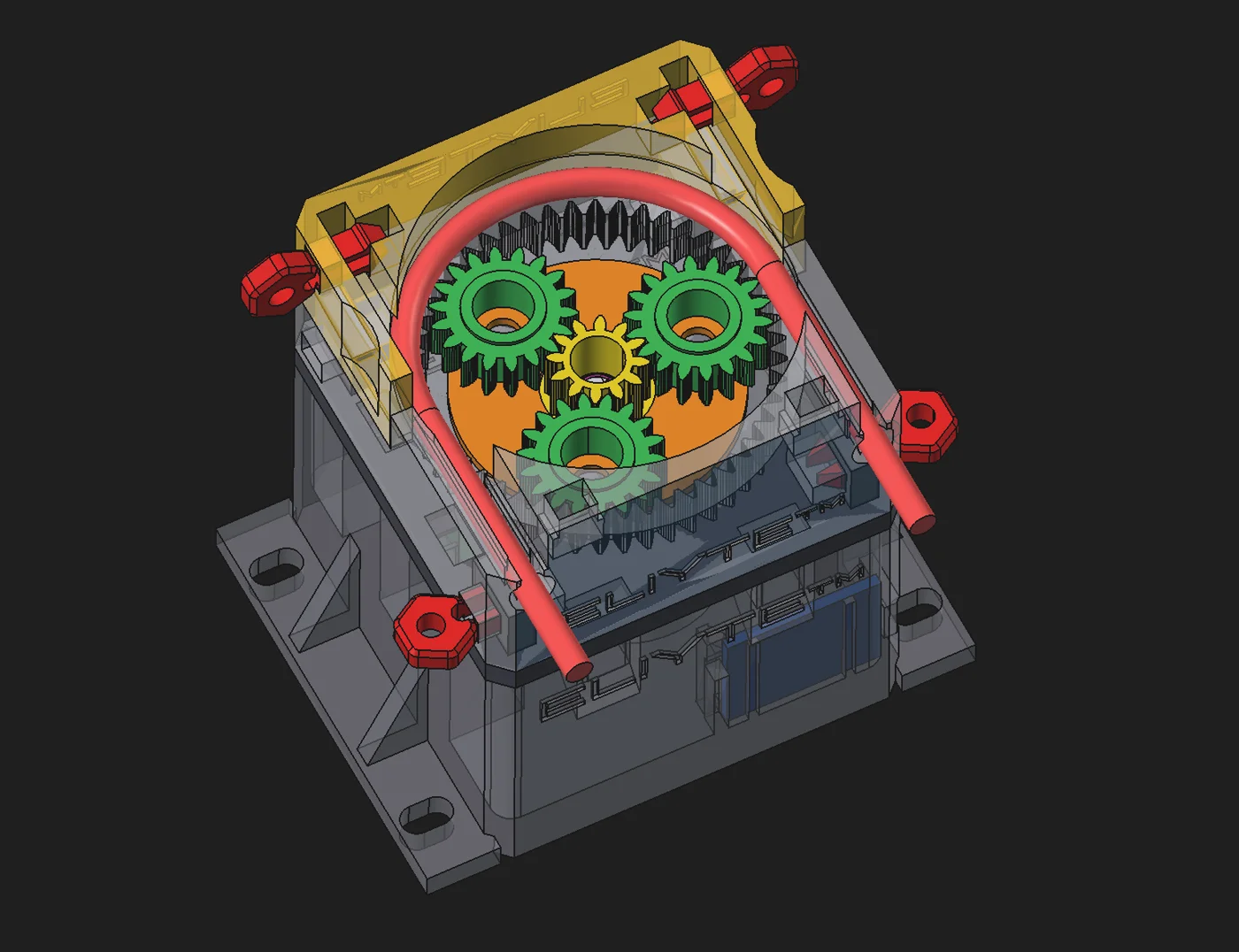
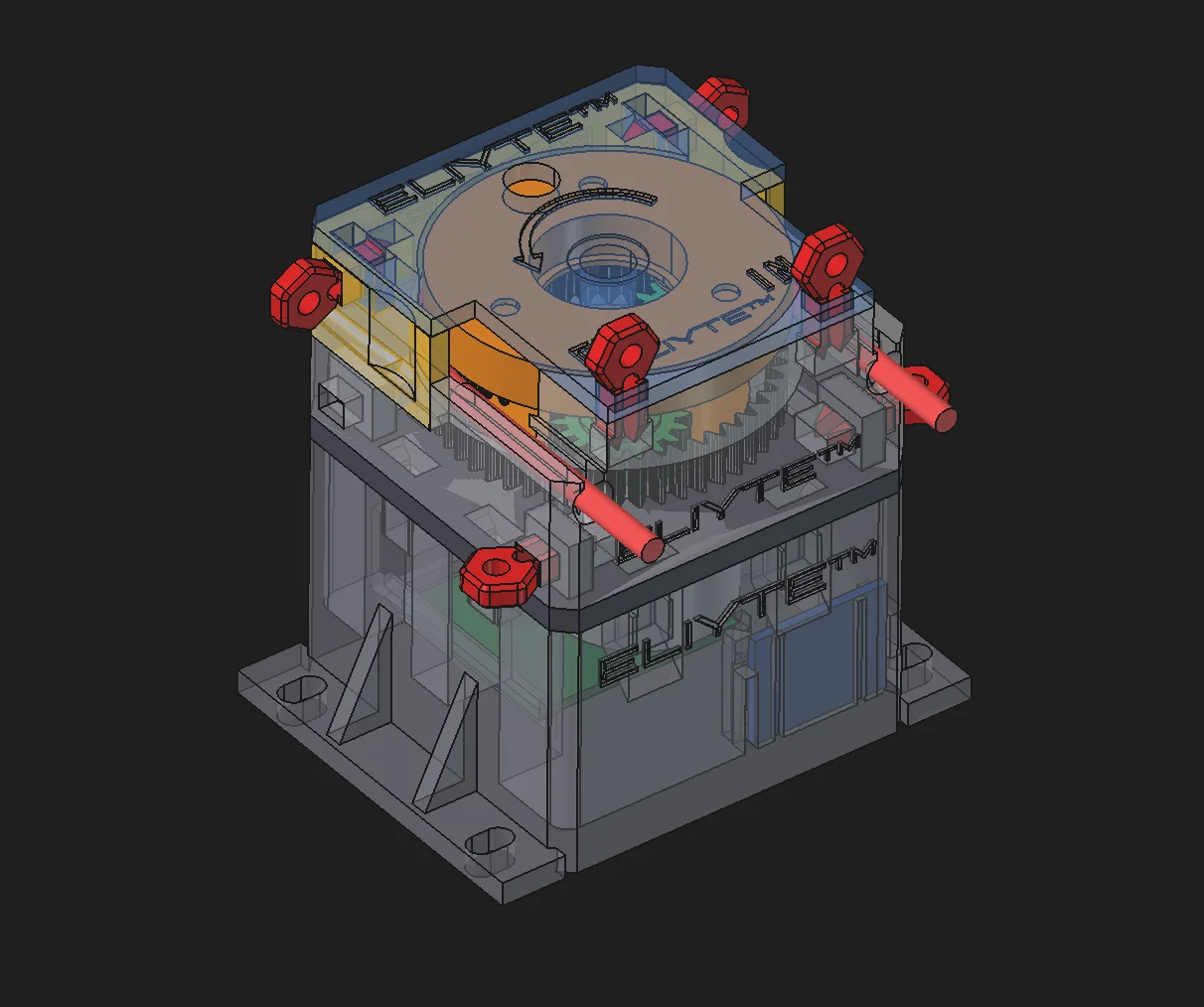
CAD render of the peristaltic pump drive with orange gear train and red tubing path inside a printed housing.
FIG. II-A — ROTOR AND TUBING PATH. Printed gear reduction around the tubing channel.
Transparent CAD render of the full peristaltic pump assembly showing rotor, rollers and fittings.
FIG. II-B — ASSEMBLY. Rotor, rollers, fittings.
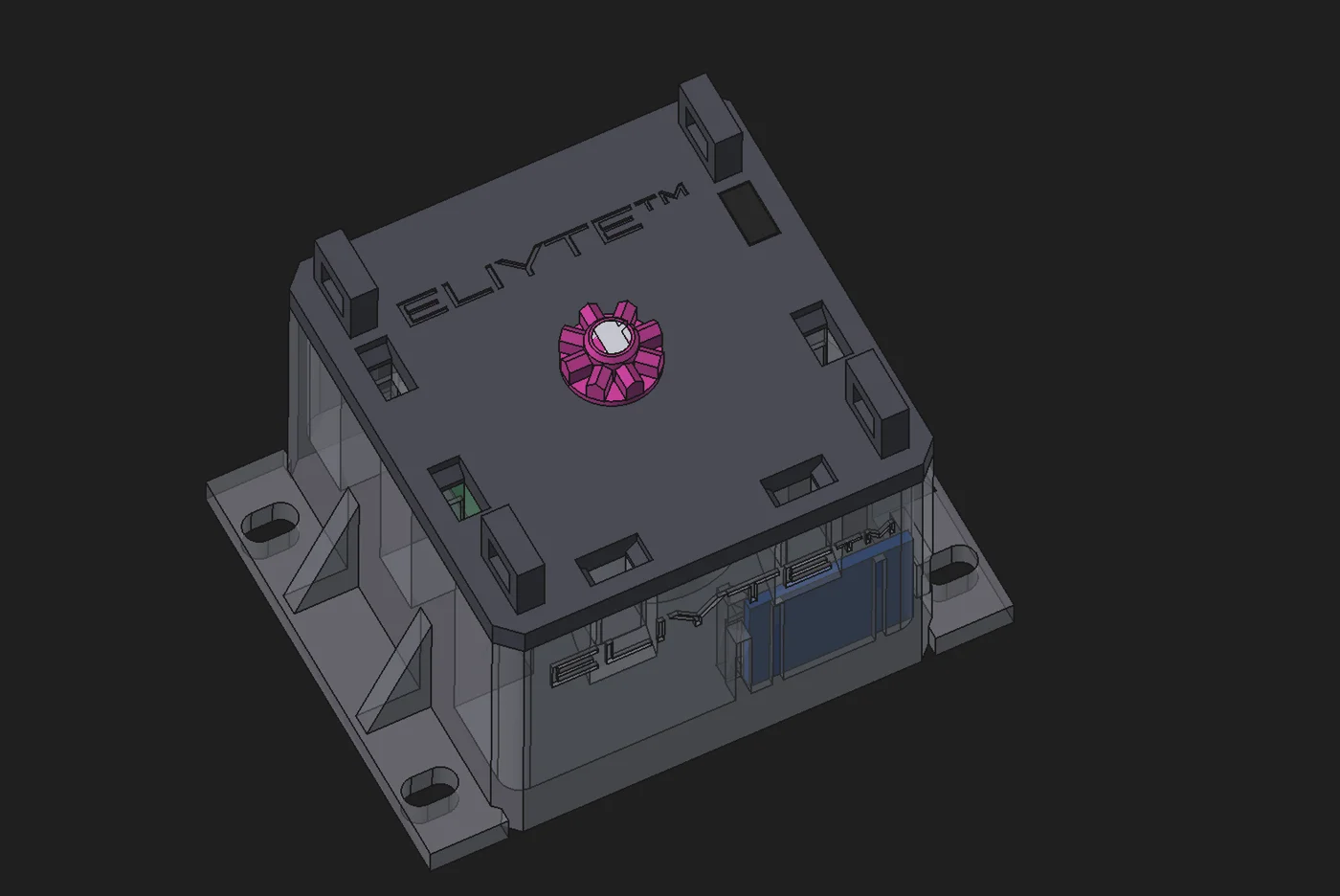
CAD render of the production pump housing carrying the ELIYTE mark with the rotor visible.
FIG. II-C — PRODUCTION HOUSING. Carries the ELIYTE mark (Plate VI of marks below).
FIG. II-D — EXPLODED VIEW, ANIMATED. Assembled → labelled CAD-colour explosion → 360° turnaround with reassembly; loops seamlessly.
Motivation

A friend won a national scholarship for an undergraduate research project — the budget was approved and the work had started. Weeks before the deadline, the distributor’s quote for the peristaltic pump the project depended on tripled. A commodity instrument nearly stopped funded research, because the only people standing between the factory and the bench decided to raise the price.

Why

At the time I was already working on cutting a device’s production cost for an employer, so the lesson transferred directly: laboratory instruments should be producible and accessible, not gated by a supply chain. I had just bought my first FDM printer (it was already paying for itself making enclosures at work), and I decided the same machine should make the pump.

How

Three years of versions. I started with the cheapest stepper motor on the market, so the first problem was torque: I designed an external gear reduction, prototyped its housing out of Lego with printed critical parts, then industrialized the design until every structural component printed. Rotor, gears, rollers, housing: all FDM. Bearings resisted: printed ones wear and crush under load, so they remain the one conventional part, with printed bearing discs on the roadmap. Control is an ESP32 with Bluetooth and Wi-Fi, monitored and driven from an online dashboard.

Result

The current version runs exactly as intended, at the flow rates and the cost I set out to hit — the whole bill of materials stays under US$100. It became the template for everything after it: the micropipette (Plate III) applies the same thesis to liquid handling, and the pump itself is scheduled to be driven from the same shared dashboard.

PLATE III

FDM-Printable Micropipette

In development
StatusIN DEVELOPMENT — CAD ITERATIONS
ApproachREVERSE-ENGINEERED · SYRINGE-BASED PRESSURE
TargetFDM-PRINTABLE · SINGLE-VOLUME PRECISION
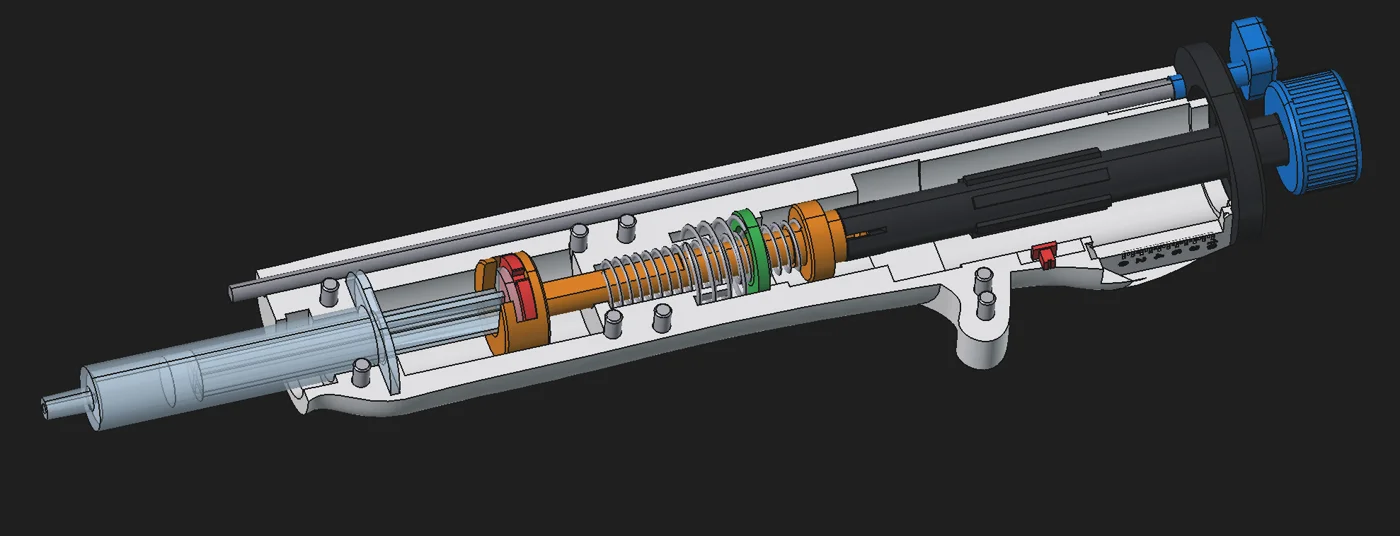
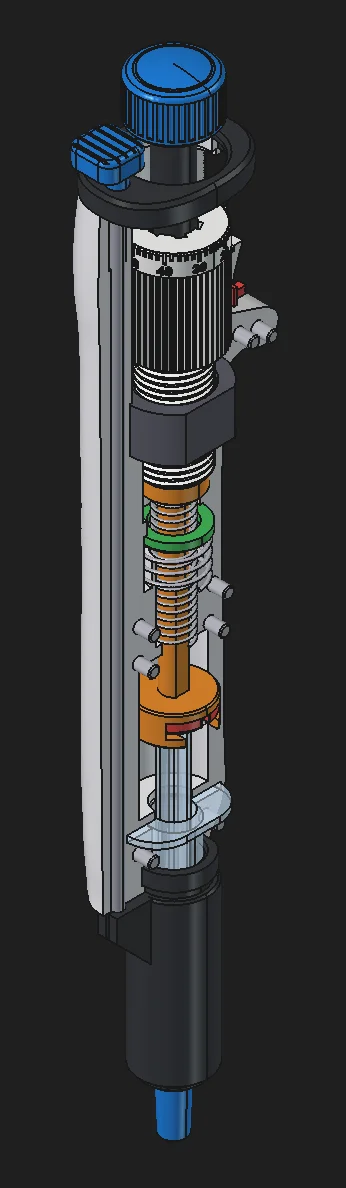
Cross-section CAD render of the printable micropipette showing plunger, spring and seal geometry.
FIG. III-A — CROSS-SECTION. Plunger, spring and seal stack; the geometry that carries the precision.
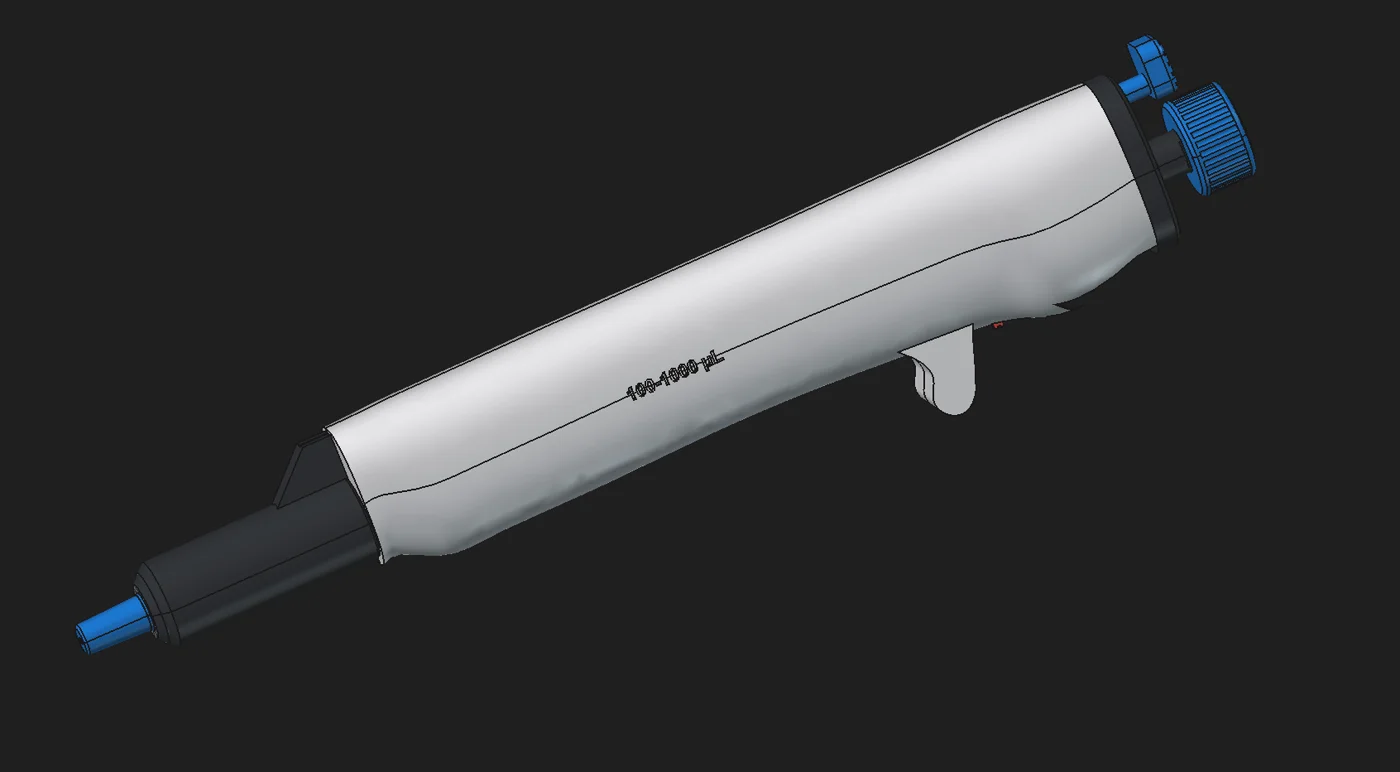
External CAD render of the micropipette body and tip cone.
FIG. III-B — BODY. External form around the mechanism.
Detail render of the micropipette spring stack.
FIG. III-C — SPRING STACK.
FIG. III-D — EXPLODED VIEW, ANIMATED. Assembled → labelled CAD-colour explosion → 360° turnaround with reassembly; loops seamlessly.
Motivation

My partner came to me with a broken micropipette — she used a single measurement volume, and a replacement meant real money at Turkish retail prices. I asked to open it first. The volume-selection gear had snapped under age stress; at a fixed volume, seating it at the right angle restores the pipette completely.

Why

Opening the original taught me where the precision actually lives: the manufacturer uses a pressure chamber far larger than the instrument’s size suggests, and the accuracy comes down to ordinary screws. If precision is geometry, it can be printed. And pipettes sit right next to pumps at the top of every lab’s shopping list, so this extends the pump’s thesis (Plate II) to the other half of liquid handling.

How

I reverse-engineered the original mechanism and researched the pressure problem to a practical answer: standard syringes achieve usable accuracy across the volumes that matter, at a cost no supplier can match. The current work is the plunger, spring and seal geometry (the CAD iterations above). I have not printed a prototype yet: the model is not good enough yet, and I won’t print until it is.

Result

In progress, deliberately. Next milestones: a model I am satisfied with, the first print, then a shared IoT dashboard that drives the pipette and the pump from one place.

PLATE IV

Self-Healing City Mesh Network

Prototype
StatusPROTOTYPE, DEMONSTRATED
StackESP32 · ESP-NOW · LORA · BLE
Node cost~US$2–3 CONTROLLER
FeatureLAYERED, SELF-HEALING TOPOLOGY
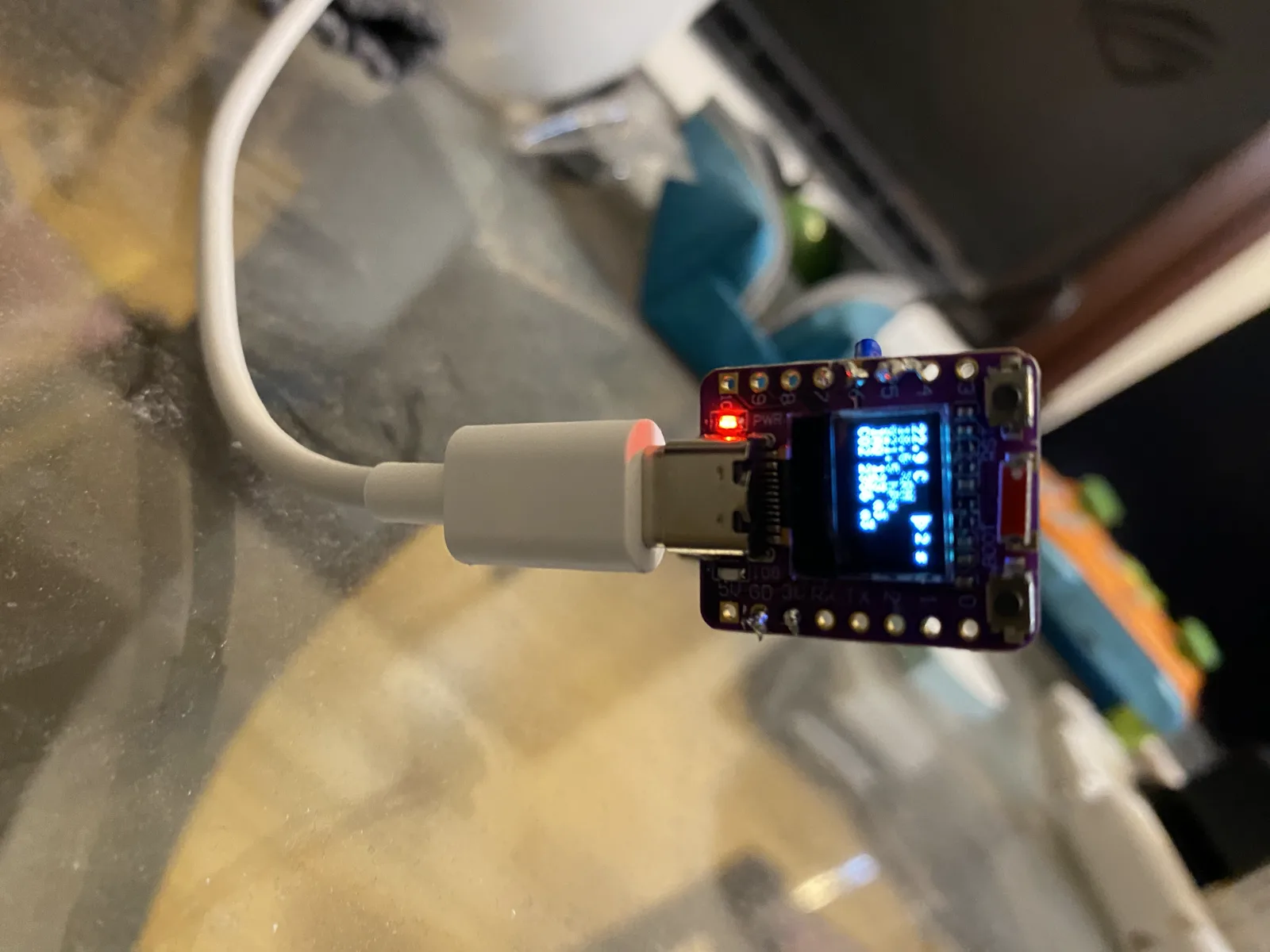
A mesh node in a 3D-printed case with its OLED display lit showing live route statistics.
FIG. IV-A — NODE, LIVE. OLED showing route statistics from the self-healing demo.
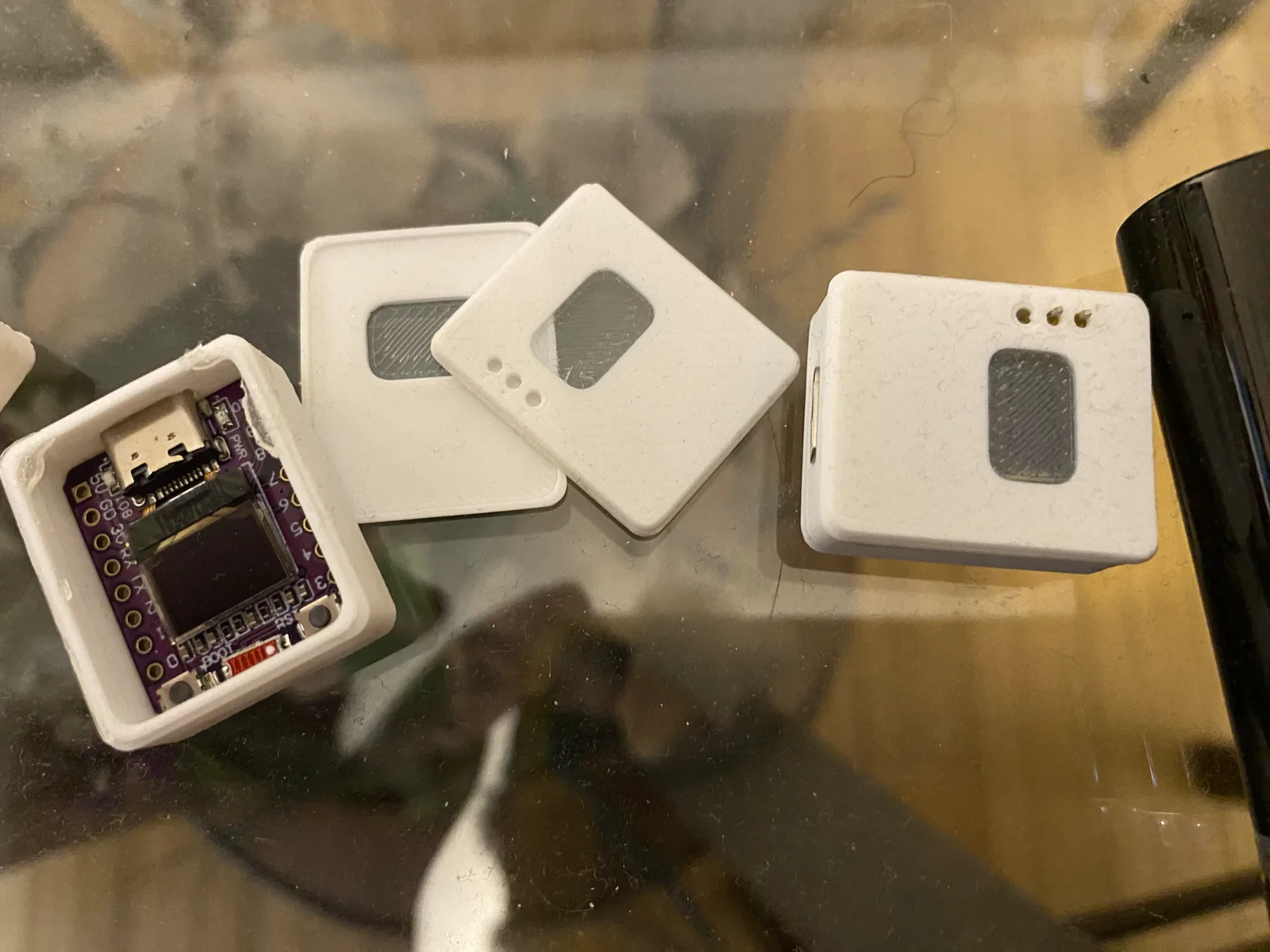
3D-printed node enclosures, one open showing the controller board inside.
FIG. IV-B — CASED NODES. ~US$2 controller, printed case, OLED shield.
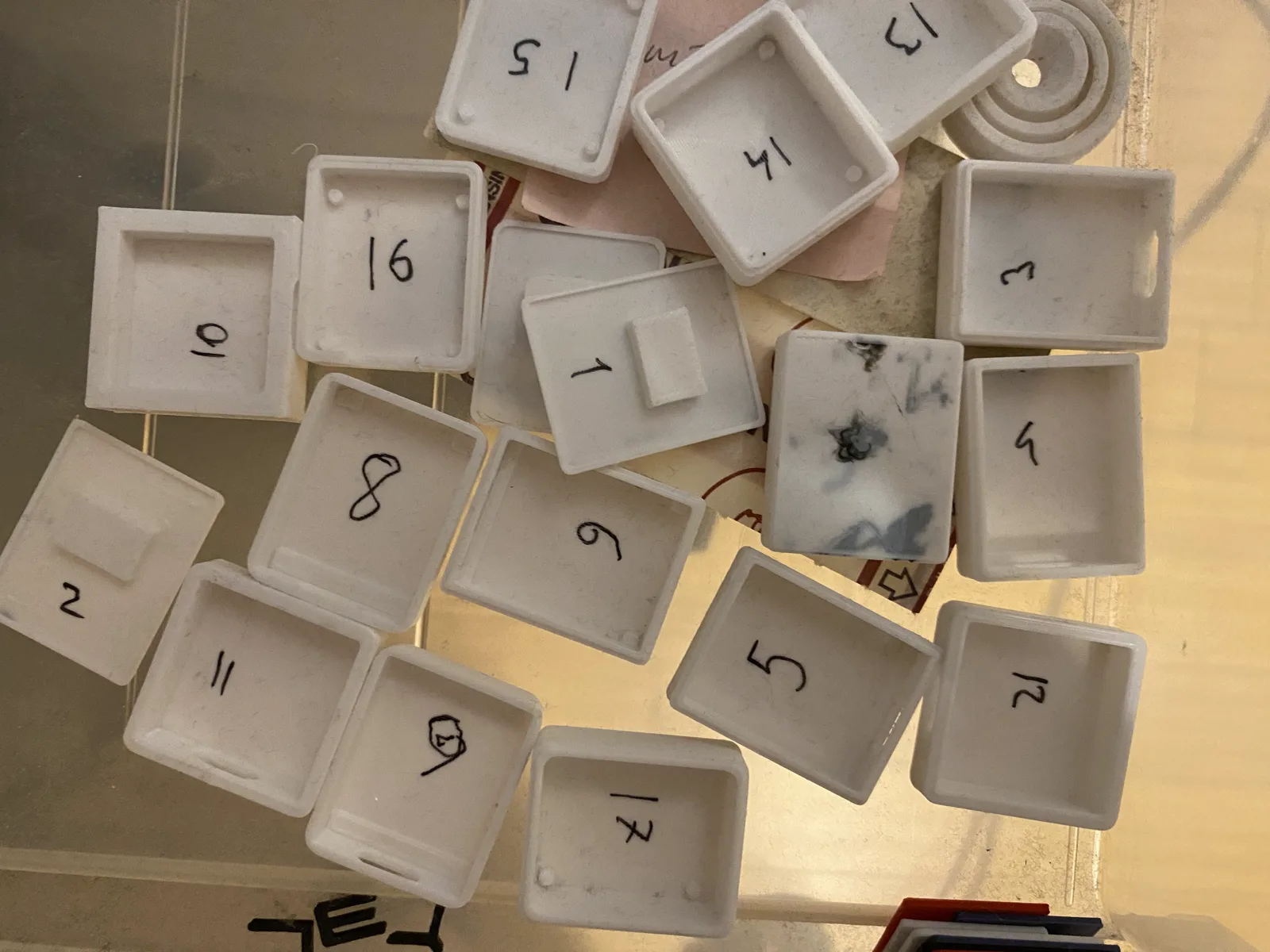
Dozens of numbered translucent enclosure prototypes laid out on the bench.
FIG. IV-C — ITERATION RECORD. Numbered cases, kept from every round.
Motivation

While running an intensive-care data project I met an engineer who referred me to an energy products company; their vision was a platform that would unify their own hardware with other vendors’. Planning their software kept me close to the hardware side, where I found plenty waiting to be improved — and the company let me pursue it. Later I met one of their customers: they liked the products, but GPRS connectivity, with its SIM costs, had become a burden.

Why

I told them a mesh layer could remove that cost, then went home and built the proof before pitching anything. An ESP32 costs about two dollars; a layered, self-healing city network could carry what the SIM cards were carrying, for close to nothing.

How

The first demo came together around a simple data flow and a layered urban topology that heals itself when nodes drop: ESP-NOW for short hops, LoRa for long ones, every node in a 3D-printed case with an OLED status display. I presented the working prototype to the company; their R&D team turned out to be exploring the same idea, and we exchanged findings in good faith across several meetings. In the end their appetite for the project cooled, and the prototype was shelved.

Result

Shelved, but the capability stayed. LoRa, BLE and ESP-NOW now sit on top of my GPRS and embedded experience, and the numbered cases above are the iteration record. The direction (cheap, dense, self-healing environmental sensing) feeds directly into my graduate work.

PLATE V

Trading Infrastructure & ML Research

Research
Latency~0.5 S END-TO-END · ~65 MS DECISION
ThroughputMILLIONS OF TRADES / MIN
OptimizationNUMBA JIT: ~90 S → ~12 MS
Load2,000–5,000 / DAY
EXCHANGE PARSER CANDLE AGGREGATION FEATURES MODELS (PLUGINS) DECISION EXECUTION ≈ 0.5 s END-TO-END (MEASURED, HOME HARDWARE) ≈ 65 ms decision MODEL HOT PATH VIA NUMPY + NUMBA JIT: ~90 s → ~12 ms · NEW PREDICTORS GO LIVE AS PLUGINS IN MINUTES

FIG. V-A — Live path, schematic. Latencies as measured on my own hardware.

Motivation

I started trading in my first year of high school, running orders through my mother’s bank account with allowance I had saved, one of the sparks that later took me into economics. I had been coding since primary school, so automating my own analyses felt like the obvious next step. In 2014, at a holiday gathering, my cousin’s husband heard the plan, handed me the Shazam algorithm paper, and told me to learn object-oriented programming; until that day I had written only function-based code.

Why

I wanted analyses that run themselves, on infrastructure that behaves the way the exchange actually behaves. The retail-grade backbone I needed did not exist in Türkiye, so I would have to design the architecture from zero and build it myself.

How

Two recent years of near full-time work, on an architecture designed from scratch. Every market trade is processed on home hardware at an average 0.5 s end-to-end latency; aggregated candles are built from several million trades per minute without drops. The model hot path is accelerated with NumPy and Numba JIT, cutting a critical execution path from roughly 90 seconds to 12 milliseconds. Models are plugins: a new predictor (including transformer designs) goes live in minutes. Studying how the banks’ historical data infrastructure behaves let me tune my own communication flow to match it.

Result

A live, end-to-end system: from the live data pool through model inputs, inference, decision, and order transmission in under a second, handling 2,000–5,000 transactions daily at ~65 ms decision latency. Backtests against agentic and mathematical comparisons have produced findings I find genuinely interesting; because the data is financial, none of it is published yet. Publishing from this line of work is a planned next step, and part of why I am pursuing doctoral research.

PLATE VI

YerliMail — yerlimail.com

In service
StatusLIVE, IN SERVICE
Cost~US$5 / MONTH, FIXED
StackCLOUDFLARE WORKERS · EMAIL ROUTING · D1 · R2 · KV
ClientsMOBILE APPS · OUTLOOK IMAP BRIDGE
INBOUND MAIL EMAIL ROUTING WORKERS API STORAGE D1 · R2 · KV SEND PROVIDER (IP REPUTATION) OUTBOUND MAIL CLIENTS: APPS + OUTLOOK IMAP BRIDGE Receiving is native to the platform · sending is outsourced for IP reputation · storage and API are paid per use

FIG. VI-A — Topology, serverless. One worker script and three managed services; no rented server anywhere.

Motivation

I owned yerlimail.com — a domain I had bought because I loved the name, and it sat idle. Then Turkcell closed its national e-mail service, and people went looking for a national e-mail service of their own — they found my domain and started e-mailing me. The demand arrived at my door before any product existed.

Why

Renting servers against speculative demand was not viable for me, but I wanted this to exist. Breaking e-mail into its parts showed a way: receiving mail is a native, free capability on serverless platforms; storage and APIs can be paid per use; sending is the one part worth outsourcing, because IP reputation is shared infrastructure. Most users need an address for verification codes and sign-ups: low volume, high value. That arithmetic made a fully serverless e-mail provider possible on about five dollars a month.

How

I built the whole stack on Cloudflare: inbound routing, storage, APIs, and my own mobile apps as the primary clients, because serverless cannot speak IMAP or POP3, and I judged most users want an app, not a protocol. Corporate users who insist on Outlook get a small local IMAP bridge that runs on their own machine. The first customer couldn’t send mail and messaged me on WhatsApp; that night I built telemetry: every error, at every level, logged and collected. Reading those logs by hand didn’t scale, so I designed an agent flow that reads the errors, groups them, researches fixes, writes the code, and submits it for my approval. The MVP took three sleepless days.

Result

Within three months the system reached zero daily software errors, every requested feature shipped, and every user who arrived got an answer. I run my own e-mail on it proudly; so do my web clients. The same serverless pattern is now extending to cloud storage as hizlidepolama.com. Reviving one of the internet’s oldest communication systems on an architecture that hadn’t been used for it, at a cost anyone can manage, is the part I am proudest of.

Service Record

Aktif Enerji A.Ş.
Software Project ManagerJan 2024 – Jan 2025

Automated remote meter-reading and relay-control platform operating 100,000 devices in under ten minutes. Embedded software for STM32- and ESP32-based communication modems, integrating field hardware with remote command and data services. Handheld probe terminals for local electricity-meter reads.

Alfa-Line Telecommunication Services
Software Project ManagerJan 2022 – Jan 2023

Intensive-care data-flow management system coordinating nurses, physicians, and patient-monitoring devices. HL7-based data exchange for interoperability between monitoring devices and clinical workflows.

Open Source

Elsevier MCP
MCP serverAI agents ↔ scholarly APIs

Connects AI agents to Elsevier APIs: Scopus search, research-article retrieval, and scholarly metadata — the lookup layer for a literature review that runs itself.

github.com/kemalabuteliyte/elsevier-mcp
FTP MCP
MCP serverAI agents ↔ file transfer

AI-agent file operations over FTP, FTPS and SFTP — remote transfers and synchronization, so an agent can move data, not just read about it.

github.com/kemalabuteliyte/ftp-mcp

Registered Marks

Names I have registered and hold for current and future ventures. The first one you have already met: ELIYTE is the mark on the pump housing in Plate II.

Trademark register
MarkFieldStatus
ELIYTEengineering & instrumentation My main brand. It goes on everything I create — instruments, software, whatever comes next off the bench. Registered
MAKYAJMASTERmakyajmaster.com Beauty and cosmetics brand. Registered
SANAL ARSAvirtual land platforms Virtual land and digital real-estate brand. Registered
SİHİRLİ DÜKKANsihirlidukkan.com Retail and e-commerce brand. Registered

Correspondence

I am applying to doctoral programs in instrumentation, sensing, and applied AI. If my work fits a group you know, or you simply want to argue about gearboxes, I would be glad to hear from you.

Curriculum vitae Download PDF